Loaded fries can look attractive in a development photograph while becoming difficult to assemble consistently during service. The base portion, sauces, toppings and packaging all compete for attention. Without a clear recipe, the item can drift into an expensive collection of generous handfuls.
A stronger approach treats loaded fries as a complete menu product. Define the eating experience, cost every component and test the assembly sequence under realistic demand. Then choose the fry product and toppings that fit that system rather than building the dish around whatever happens to be available.
Start with one clear concept
Decide what makes the dish distinctive: a flavour direction, a specific topping combination or a sharing format. Avoid adding ingredients only because they look abundant. Too many components can make the dish harder to eat, slower to assemble and less consistent.
Write the intended serving format. A dine-in bowl, a sharing platter and a delivery box may need different quantities or arrangements. Approve each format on its own merits rather than assuming that a photogenic restaurant plate can be transferred unchanged into a takeaway container.
Choose the fry through a complete-dish trial
Confirm the candidate product’s current specification and preparation instructions. Prepare it appropriately, then assess it with the planned toppings and service sequence. The best plain fry in a tasting is not automatically the best base for a loaded dish.
Record how the toppings are distributed and how the customer is expected to eat the portion. A dish that presents well from above may be awkward if all the sauce is concentrated in one area. The trial should evaluate the whole serving, not only the first attractive bite.
Give every topping a quantity
List sauces, vegetables, garnish and other ingredients with a defined portion. Use a practical dispensing or weighing method and verify it during training. Small high-cost toppings can create a large variance when added by eye.
Include the base fry quantity at the same measurement stage used by the costing sheet. If the recipe specifies finished fries, use trial data to translate that into purchased input. Keep ingredient information available for the complete dish and verify any menu claims through your normal process.
| Component | Standard to define | Check during service |
|---|---|---|
| Fries | Product and portion basis | Weight and preparation |
| Primary topping | Quantity and distribution | Consistent coverage |
| Sauce | Measured amount and placement | No uncontrolled extra pour |
| Garnish | Defined finishing quantity | Matches reference presentation |
| Container | Approved dish or delivery box | Eating and transport suitability |
Cost the complete serving
Add all ingredient components and the relevant packaging. Keep labour and other operating costs consistent with your business’s costing method. Do not evaluate the dish only by the low apparent cost of the potato base.
A hypothetical topping costing EGP 4 per standard serving becomes EGP 6 if operators routinely use half as much again. Across several toppings, that drift can erase the planned contribution. The numbers are illustrative; the lesson is to connect the cost sheet to measurable quantities at the station.
Test assembly at peak demand
Time a short run of representative orders, including the other menu items sharing the same equipment and workstation. Observe whether the loaded-fries dish creates a queue at frying, topping or packing. A quick single-order test can conceal a bottleneck when several orders arrive together.
Simplify where the trial shows unnecessary movement or repeated decisions. Predefined component positions and a clear assembly sequence may help. Any preparation or holding arrangement must still follow the kitchen’s approved procedures and product instructions.
Give delivery its own approval
Test the actual packaging and order journey for delivery service. Assess the dish as a whole, including sauce distribution, ease of eating and the condition at handover. Do not promise a particular travel performance based only on an immediate kitchen photograph.
If the delivery version needs a different arrangement, document it clearly. Staff should not have to improvise between channels. The menu description and image should reflect the version the customer receives.
Launch with a review point
Track sales, preparation issues, portion checks and customer feedback during the initial service cycle. Compare actual ingredient use with the recipe estimate. If the item sells well but slows the pass, the next decision may involve simplification rather than immediate expansion into more variations.
Avoid launching several nearly identical loaded-fries options before the base process is stable. Each additional topping combination adds stock and assembly complexity. A smaller, well-executed range can give the team clearer evidence about what customers actually choose.
Questions during development
Can a dish be profitable just because fries are inexpensive?
No. Evaluate the entire recipe, packaging, portion consistency and service workload. The base ingredient is only one component.
Should the same recipe be used for dine-in and delivery?
Only if both applications pass a representative trial. Their containers and journey to the guest can create different requirements.
What should the fry supplier know?
Explain that the product will support a loaded dish, provide expected volume and ask for current specification and preparation information.
Build a product shortlist for the recipe
Compare Allumettes French Fries and Pommes Frites French Fries. Send your wholesale enquiry to Athenas Foods and validate the selected product in the complete menu item.
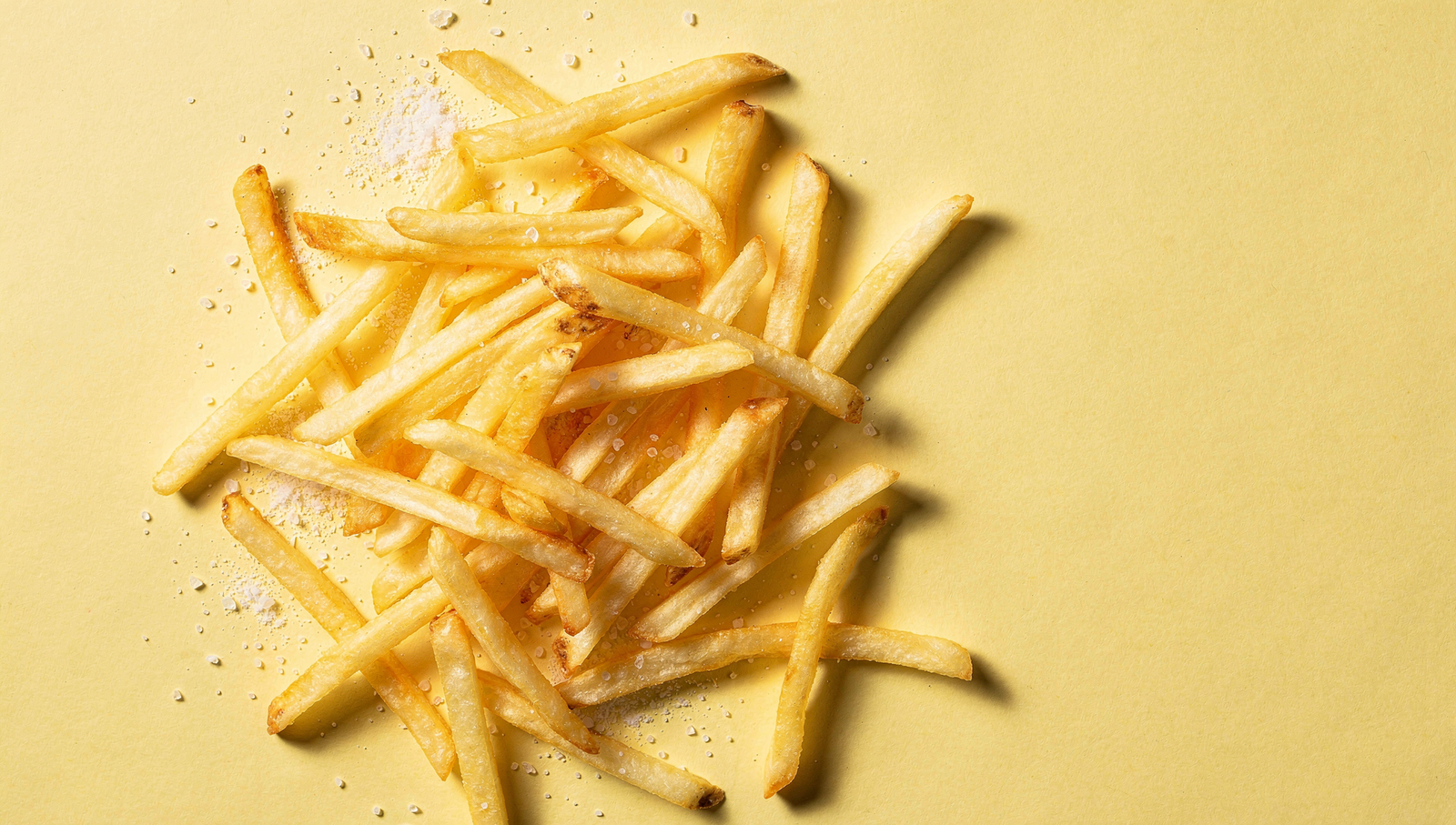
AI-generated serving inspiration; not a photograph of the packaged product.
From an idea to an enquiry
Put your reading on the menu.
Explore the range, save the products you would like to discuss and tell us what your business needs.
Prepare your enquiry