A garnish can add a distinctive finishing texture and appearance, but it can also become an unmeasured ingredient. Crispy onion is often applied in small quantities, which makes it easy for staff to treat the amount as insignificant. Across a busy service, inconsistent handfuls can change both the eating experience and the purchasing requirement.
The goal is to give the garnish a clear role and a repeatable quantity. Confirm the supplied product and its instructions, test it on the actual dish and connect the portion to your cost sheet. Do not assume the ingredient list or dietary suitability from the name crispy onion alone.
Decide why the garnish belongs on the dish
Identify the specific contribution: texture, flavour, visual contrast or another deliberate part of the recipe. If the garnish does not improve the dish in a clear way, adding more of it is unlikely to solve the problem. A restrained, well-positioned quantity may work better than an uncontrolled layer.
Test the garnish with the complete meal. Rice dishes, salads, loaded sides and plated mains create different contexts. Approve the applications that genuinely work rather than treating one topping as a universal finishing step across the menu.
Confirm ingredients and product information
Request the current specification, ingredient and allergen information where applicable, pack configuration and storage or use instructions. Do not describe the product as gluten-free, allergen-free or suitable for a particular diet without verifying the relevant information and your preparation conditions.
Keep the exact product identity in the recipe record. A substitute crispy-onion product may have different ingredients or characteristics, so a familiar name is not enough to approve a change. Route substitutions through your normal kitchen and information-checking process.
Create a practical portion standard
Weigh several quantities during recipe development and assess the finished dish. Choose the amount that supports the intended experience, then identify a practical serving method. Verify the method rather than assuming that one pinch is consistent between operators.
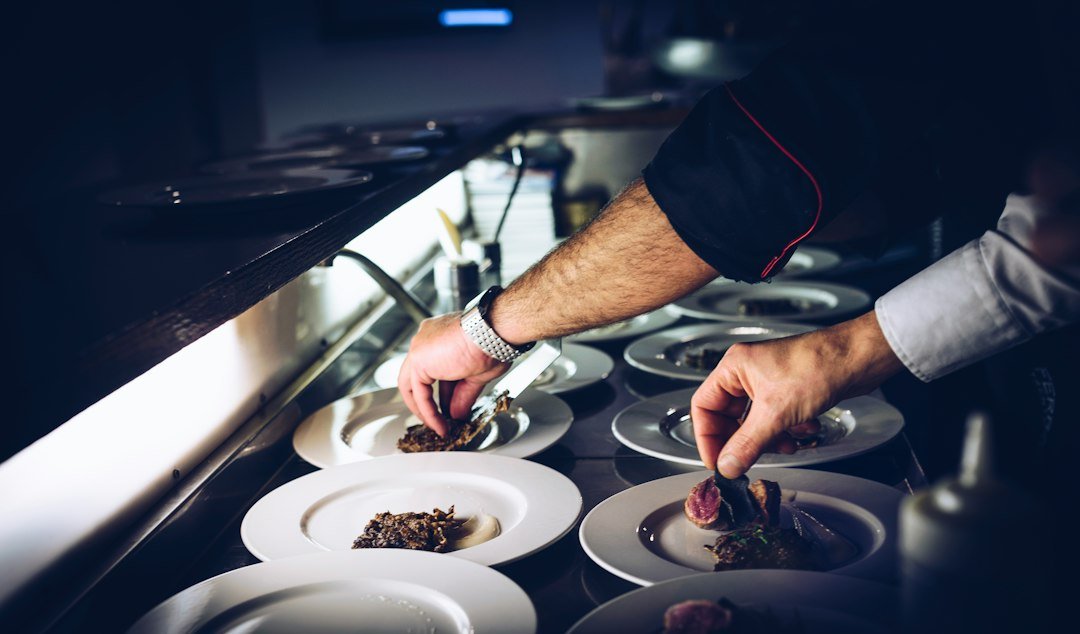
Use a reference photograph showing placement as well as quantity. A garnish spread across a large area can look and eat differently from the same weight concentrated in the centre. The staff instruction should explain what the guest is meant to receive.
| Field | Record | Review when |
|---|---|---|
| Product | Exact item and ingredient information | Supplier or specification changes |
| Application | Approved dishes | Menu changes |
| Portion | Weight and practical serving method | Variance appears |
| Placement | Reference presentation | Plate or container changes |
| Cost | Cost per standard garnish | Price or quantity changes |
Calculate the repeated effect
Suppose a hypothetical standard garnish is 8 grams and the observed average is 12 grams. Across 250 dishes, the difference is 1 kilogram. The correct cost depends on your actual purchase price and usable quantity, but the example shows why a small ingredient deserves measurement.
Keep this calculation separate from product loss or unrecorded use in other recipes. If several workstations share the same stock, purchasing needs the combined forecast. Otherwise, the garnish may appear to be overportioned when some of the usage simply belongs to another approved dish.
Test timing and service conditions
Apply the garnish at the stage defined by your recipe and assess the dish at handover. Its interaction with sauces or other components may affect the result. Use a trial rather than assuming that the garnish will behave identically on every meal.
For delivery, assess the complete packed dish through a representative journey. If the garnish is handled separately, that arrangement needs its own packaging, cost and staff instruction. Do not introduce extra components without considering how the customer will use them.
Plan storage and handling from instructions
Follow the actual product’s storage and use directions and your approved kitchen procedures. Do not assume that a product shares the same storage category as other items on the supplier’s website. Catalogue grouping is not a substitute for product information.
Keep opened stock identified and controlled according to the operation’s procedures. Staff should know which container holds the approved product and where the relevant information is kept. Convenience at the pass should not break traceability or create confusion between similar toppings.
Review the garnish as part of menu engineering
Compare the dish with and without the proposed garnish during development and gather specific feedback. If the garnish adds meaningful value, standardise it. If it is mainly decorative and expensive, consider whether another presentation better serves the menu concept.
After launch, check actual usage and portion consistency. A cost review should protect the intended dish, not simply remove small ingredients because they are easy to cut. The better decision is based on guest experience, recipe purpose and measurable quantity.
Buyer questions
Does a small garnish need a recipe quantity?
Yes. A practical standard helps control both presentation and repeated cost, especially when several operators finish the same dish.
Can ingredient claims be inferred from the name?
No. Confirm the current product information and the complete recipe before making dietary or allergen-related claims.
What should we include in the enquiry?
State the intended dishes, estimated usage and delivery requirements, and request current ingredients, preparation or storage information and pack details.
Request the details for your garnish trial
Review Eden Gardens crispy onion and the Athenas Foods catalogue. Send your product enquiry and confirm the current specification before approving the garnish for your menu.
Cover stock photograph: Fabrizio Magoni / Unsplash. Photography illustrates ingredients and serving ideas; it does not depict Athenas products or facilities.
From an idea to an enquiry
Put your reading on the menu.
Explore the range, save the products you would like to discuss and tell us what your business needs.
Prepare your enquiry