Fries can leave the kitchen in an acceptable condition and reach the customer differently. The product, preparation, portion, packaging and journey all contribute to the result. Replacing the fry without testing the rest of the process can leave the restaurant paying more while the same delivery problem continues.
A useful trial treats the order as a complete system. It asks what the customer receives after the normal packing and delivery sequence, while keeping food handling within the operation’s approved controls. This guide offers a comparison method rather than a promise that a particular cut or container will perform universally well.
Define a representative delivery scenario
Use your actual service area and order process to choose representative trial conditions. Include the time between preparation, packing, rider collection and handover. Do not test only the shortest possible journey and treat it as evidence for every order.
Separate ordinary conditions from exceptional delays. The trial should help the restaurant design a workable service and recognise when an order falls outside that design. It should not create a marketing claim such as guaranteed crispness for a fixed period without appropriate evidence.
Fix the product and preparation variables
Use the exact product intended for the menu and follow its instructions and your approved preparation method. Record batch size, finished portion and the point at which the order is packed. If these variables change between packaging tests, the team will struggle to identify the cause of a different result.
Check the complete meal as well as the fries alone. A container holding fries beside a moist main component may behave differently from a separate side box. The delivery experience belongs to the meal the guest buys, not an isolated test portion.
Compare suitable packaging options
Select food-contact packaging appropriate to the product and your operating requirements. Test the options supplied by your packaging provider rather than assuming that any vented or closed container is automatically the right choice. Consider structure, fit, packing sequence and how the meal arrives.
Keep the portion quantity the same during the first comparison. Overfilling one container while using a moderate portion in another creates a confounded test. Once a suitable option is identified, verify the final menu portion in that packaging.
| Variable | Keep or record | Assessment point |
|---|---|---|
| Fry product | Exact item and preparation method | Kitchen release |
| Portion | Agreed finished quantity | Before packing |
| Packaging | Specific box and packing arrangement | After simulated journey |
| Order sequence | Preparation, pickup and handover timing | Complete customer route |
| Meal interaction | Separate or combined components | Final eating experience |
Use a repeatable assessment
Ask testers to rate specific observations: appearance, texture, temperature experience within the approved process, ease of eating and compatibility with the main meal. Record the time and conditions of each assessment. A general good-or-bad response gives little direction for improvement.
Do not turn a tasting panel into a safety release procedure. Your operation’s food-safety controls determine whether the process is acceptable. The sensory trial evaluates quality within that controlled process, not whether a questionable order can still be sold.
Change one major factor at a time
If both the fry and packaging change together, an improvement cannot easily be attributed to either. Start with a controlled comparison, then combine the best-supported choices and verify them as a complete order. This keeps the number of trials manageable while producing useful evidence.
For example, compare two suitable packaging formats using one approved fry and portion. Then compare alternative fry products in the preferred packaging, following each product’s appropriate preparation method. Document any remaining differences so the final decision is honest about what was tested.
Include the commercial effect
Calculate the cost of the actual portion and packaging, not just the fry input. If a new format changes packing time or requires a separate container, record that operational effect. A small improvement may be worthwhile, but the restaurant should know what it costs to deliver it consistently.
Review customer feedback after introducing the change. Look for patterns tied to journey conditions, order size or pickup delays. Do not interpret one complaint as proof that every order has failed, or one positive comment as proof that the process needs no further checks.
Turn the trial into a service standard
Document the approved product, portion, packaging and packing arrangement. Give staff a visual reference and explain the reasons for the sequence. The standard should be practical during peak service, when informal shortcuts are most likely.
Recheck the arrangement when the delivery area, main meal, portion or packaging changes. A successful trial remains relevant only while the important conditions remain comparable. Keep the record with the menu item so future changes can be evaluated quickly.
Build your product shortlist
Explore Pommes Frites French Fries and Allumettes French Fries. Ask Athenas Foods for current specifications and quotation details, then test the selected products within your own delivery process before making performance claims.
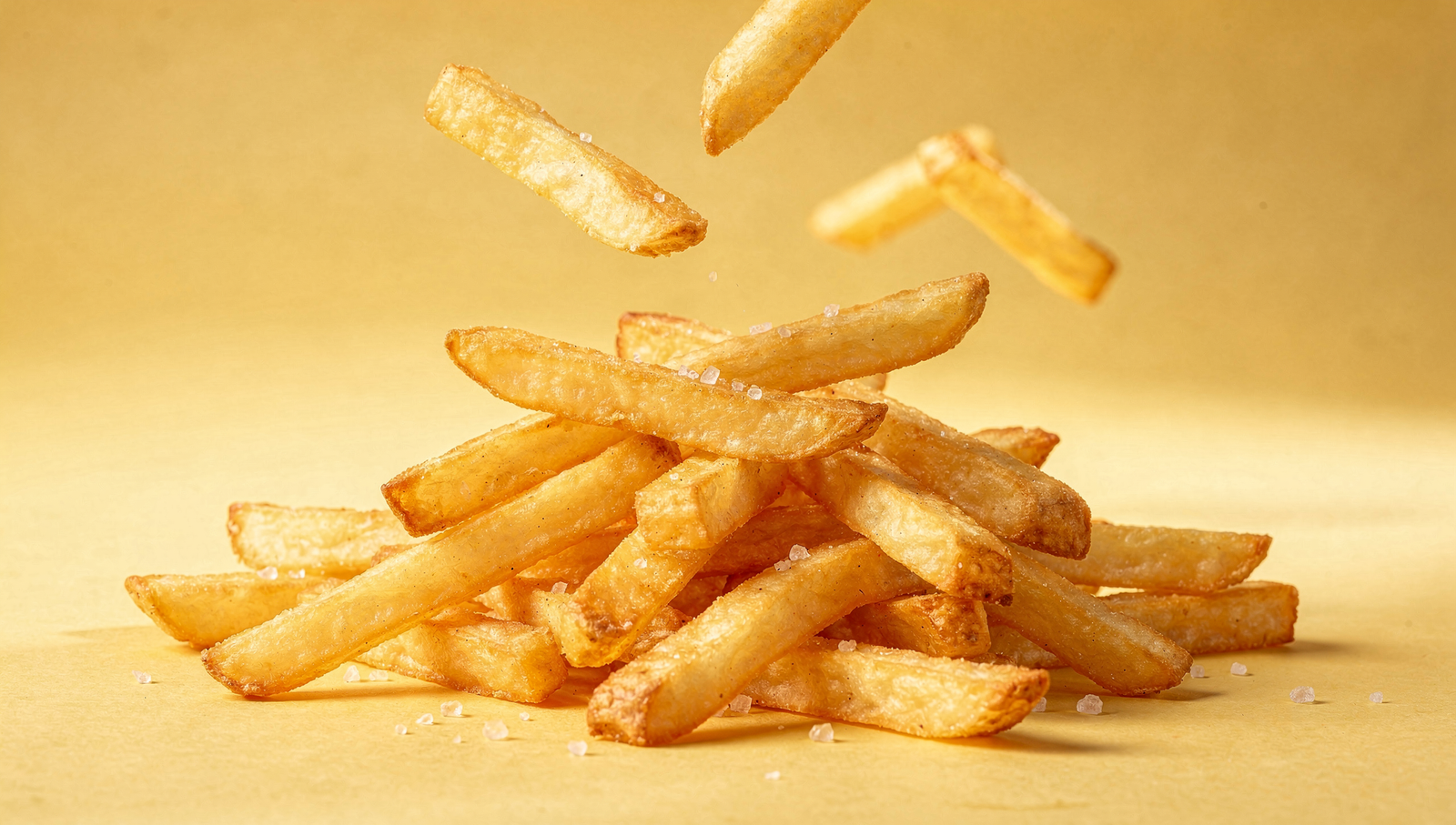
AI-generated serving inspiration; not a photograph of the packaged product.
From an idea to an enquiry
Put your reading on the menu.
Explore the range, save the products you would like to discuss and tell us what your business needs.
Prepare your enquiry