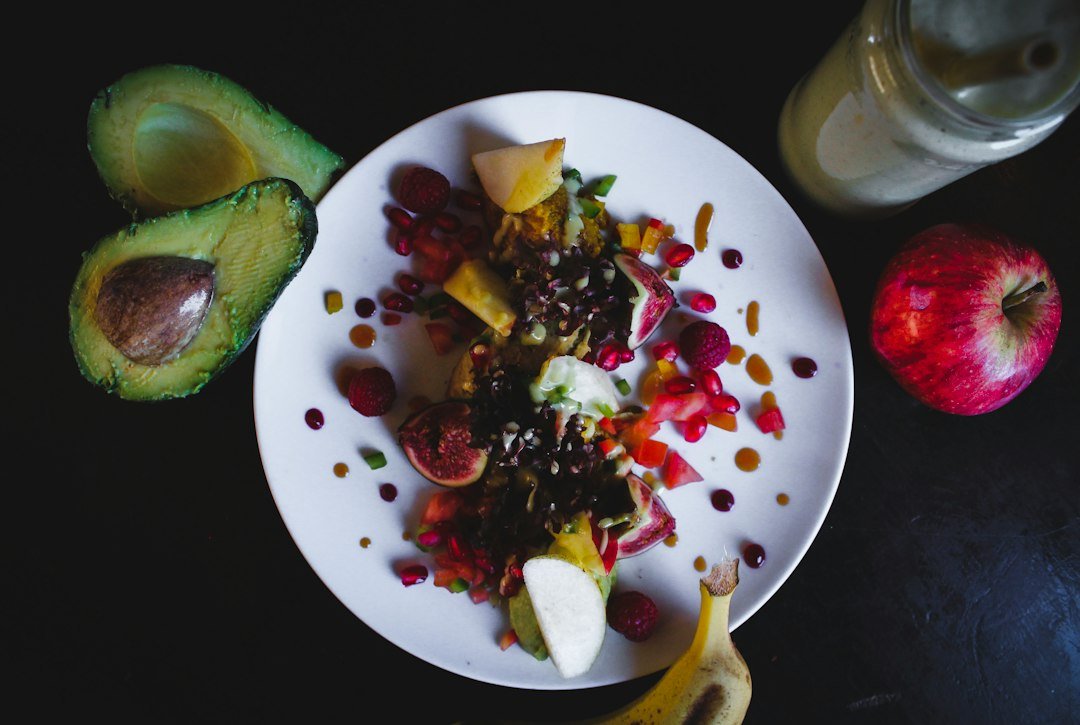
Pomegranate can give a dish a distinctive visual accent, but the buying decision should not stop at colour. The supplied form, the amount used and the way it interacts with the recipe all affect the result. For a restaurant, a small unmeasured garnish can also create a surprisingly inconsistent purchasing requirement.
Begin with the exact menu application and confirm the current product information. The catalogue name does not establish every detail of form or preparation. Where a dish uses the fruit without a later cooking step, verify intended use and follow the product instructions and your approved food-safety procedures.
Define a culinary purpose
Decide why pomegranate belongs in the dish: flavour contrast, texture, appearance or a combination. A garnish should support the recipe rather than act as a decorative default across unrelated plates. Test the complete dish to see whether the proposed quantity improves the guest’s experience.
Write down the intended placement as well as the portion. A small quantity distributed across a salad creates a different result from the same amount concentrated on one part of a plate. The reference should be repeatable by different staff members.
Confirm the product form
Ask Athenas Foods to confirm the current pomegranate specification, pack configuration and preparation information. If you require arils or another particular form, state that requirement instead of assuming it from the ingredient name.
Keep the current ingredient and intended-use information available to the kitchen. Do not make nutritional or dietary claims merely because pomegranate is included. The complete product and recipe determine what can accurately be said on the menu.
Trial the actual application
Prepare the product according to its instructions and the approved process, then assess it in the finished dish. For a salad, consider the balance with grains, leaves, dressing and other ingredients. For a dessert, evaluate the complete combination rather than a spoonful of fruit alone.
Check the dish at the intended service stage. Record the portion quantity and any effect on presentation. The trial should produce a recipe decision, not a general claim that the ingredient improves every dish.
| Application | Portion decision | Trial observation |
|---|---|---|
| Salad component | Quantity within the full recipe | Distribution and flavour balance |
| Plated garnish | Small measured finish | Placement and visual consistency |
| Dessert accent | Quantity per serving | Compatibility with other components |
| Shared dish | Total portion and serving method | Fair distribution across servings |
Cost small quantities accurately
Use the actual product cost and the portion at the correct recipe stage. If preparation changes the usable quantity, use measured output in the calculation. A small serving does not justify ignoring the purchasing conversion.
For a hypothetical 10-gram garnish across 300 plates, the planned requirement is 3 kilograms at the defined stage. If operators average 15 grams, the requirement becomes 4.5 kilograms. These figures are illustrative, but they show why a practical garnish standard matters.
Choose a workable portioning method
Test the utensil or measuring approach staff will use during service. A spoon or pinch should be checked against the approved quantity rather than assumed consistent. Keep the method simple enough for peak demand and include a visual reference for placement.
Review portions across operators. If variation is wide, investigate whether the tool, container or workstation arrangement encourages inconsistent amounts. Improving the process is more effective than repeatedly asking staff to be careful without giving them a usable standard.
Plan cross-utilisation honestly
Pomegranate may support several distinct dishes, but each should have real forecast demand. Combine the requirements from approved recipes when ordering and remove quantities when a special ends. Do not invent possible future uses to justify an oversized purchase.
Consider whether the pack arrangement fits a garnish-led usage pattern. Confirm current formats and minimum quantities with the supplier. A product used in small amounts can remain slow-moving even when it appears on several menu items.
Keep purchasing and presentation aligned
If the chef changes the dish’s visual style, update the portion and cost record. A more generous-looking finish can be a deliberate menu decision, but its purchasing effect should be visible. Otherwise, the buyer may interpret increased use as a stock-control problem.
After a service cycle, compare theoretical recipe demand with actual withdrawals and remaining stock. Separate portion variation from use in other dishes or preparation differences. The right correction depends on the cause.
Questions to resolve before approval
Does the product name guarantee arils?
Do not assume the form. Ask for the current specification of the exact listed item and explain what the recipe needs.
Can it be used directly as a garnish?
Confirm the product’s intended use and preparation requirements first. Follow the kitchen’s approved process for the application.
Is a garnish too small to cost separately?
No. Repeated small quantities affect both consistency and total usage. A simple measured standard is usually enough to make the calculation useful.
Build a precise pomegranate enquiry
Review Eden Gardens pomegranate and the Athenas Foods catalogue. Send your intended applications and volumes and ask for the current form, pack and preparation information before ordering.
Cover stock photograph: Louis Hansel / Unsplash. Photography illustrates ingredients and serving ideas; it does not depict Athenas products or facilities.
From an idea to an enquiry
Put your reading on the menu.
Explore the range, save the products you would like to discuss and tell us what your business needs.
Prepare your enquiry